Use cases
Keep Google rank history in your own stack.
Self-host Bisibility, connect DataForSEO or SerpAPI, and run scheduled organic rank checks by market and device. Store the history in Postgres and use it through the REST API.
Choose the workflow that matches your constraint.
Keep data in your infrastructure
Store rank history and provider credentials inside your own deployment.
Control cost at high volume
Use your own DataForSEO or SerpAPI account instead of a bundled per-keyword software tier.
Feed reports and your warehouse
Read rank history through Postgres, REST API, OpenAPI, or CSV exports.
Compare markets and devices
Track the same keyword separately across locations, languages, mobile, and desktop.
Automate rank tracking
Create keywords, trigger checks, and read results through API or MCP tools.
What ships today
The boundary is explicit so you can evaluate the product that exists, not the roadmap.
Available today
- AGPL-3.0 self-hosting with your own customer-controlled PostgreSQL database
- DataForSEO and SerpAPI with direct provider billing and SERP provider portability
- Scheduled organic Google rank tracking and schedules by market and device
- REST API v1 and OpenAPI, CSV export, and authenticated MCP endpoint and tools
- Owner, Admin, Editor, and Viewer team roles, audit log, and rank alerts in-app and by email
- Competitor benchmarking and Share of Voice
- Opt-in Google Search Console and GA4 connections
- Outbound webhooks
Not yet
- Hosted Bisibility Cloud is planned - join the waitlist for hosted early access
- Native geo-grid local tracking is planned, including granular local Share of Voice
- White-label client portals and custom client theming
- Push alert delivery is planned
- Slack alert delivery is planned
- Automatic competitor discovery and advanced Share of Voice history
- AI Overview and LLM visibility tracking is planned
Five reasons to choose Bisibility
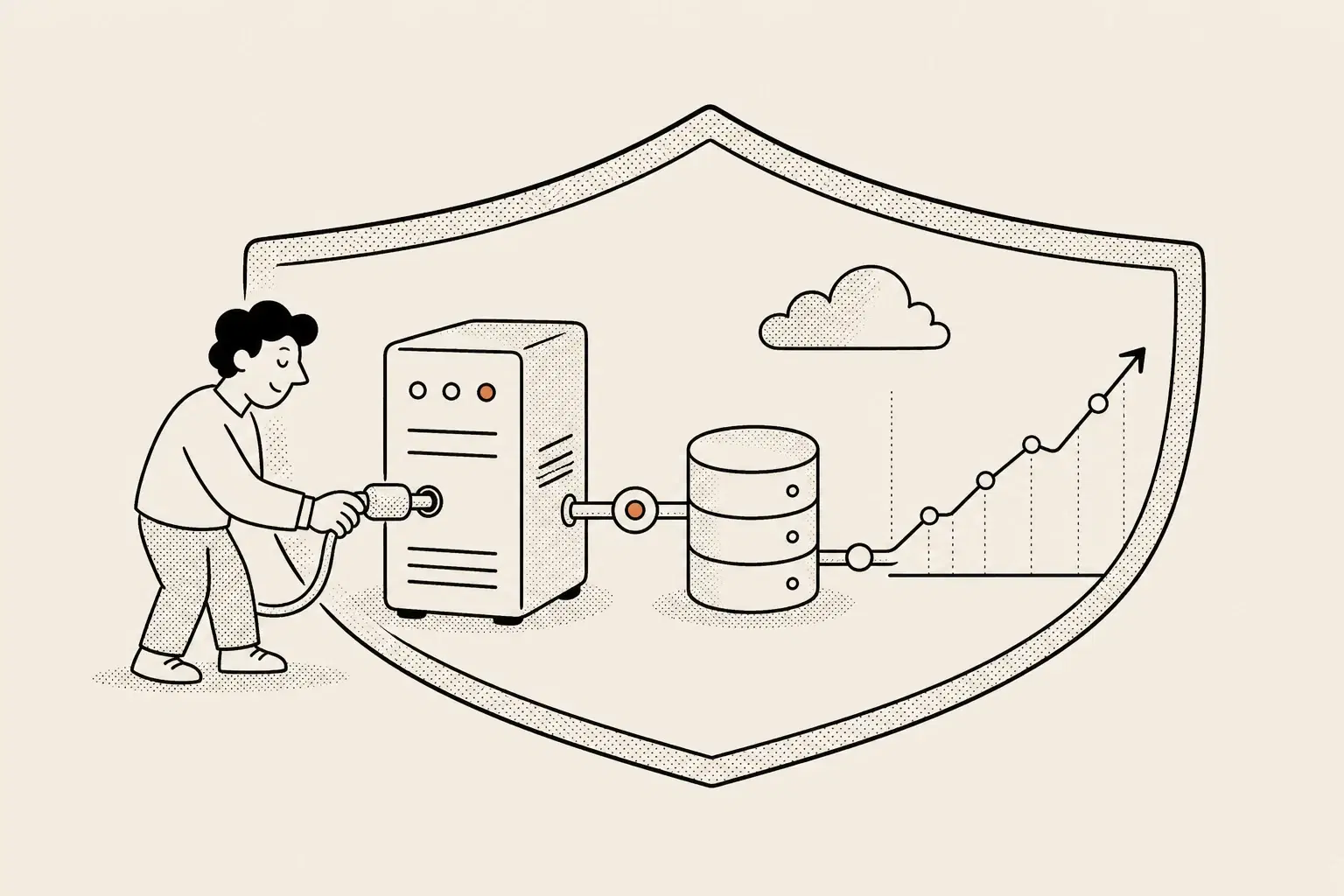
For teams owning their infrastructure
Self-host Google rank history in your own database.
Self-host Bisibility, connect an approved SERP provider, and store positions, ranking URLs, and check history in Postgres you operate.
Read the workflow
For cost-conscious teams
Self-host free and pay your SERP provider directly.
Connect DataForSEO or SerpAPI and let check volume - not a bundled software tier - determine your data cost.
Read the workflow
For agencies
Use Bisibility as the rank-data layer for reports you already own.
Organize keywords by client and campaign, then feed rank history into your dashboards through CSV, API, or Postgres.
Read the workflow
For local SEO teams
Organic local rank tracking by market and device - not Maps grid tracking.
Local rank tracking in Bisibility is for classic Google organic positions by market and device. It helps you build an owned baseline for service keywords. Native geo-grid local tracking is planned.
Read the workflow
For developers and technical teams
Add rank tracking to your open-source SEO stack.
Run scheduled checks, keep the history in Postgres, and expose it to crawlers, analytics, and automation through a documented API.
Read the workflowExamples by team
Start with the closest workflow. The deeper pages keep the specific setup and limits.
Agencies and consultants
Feed owned rank history into the client reports you already produce.
Ecommerce and marketplaces
Compare product, collection, category, and marketplace pages across markets.
Publishers and programmatic SEO
Monitor evergreen and template-driven pages through API and bulk workflows.
Data and RevOps teams
Send rank history to your warehouse and combine it with your own business data.
Developer and AI-agent teams
Give scripts and agents typed access to keywords, checks, and JSON results.
Multi-domain portfolios
Keep projects for several brands and domains in one self-hosted deployment.
Multi-market organizations
Separate organic rank baselines by country, language, market, and device.
Example workflow
- 1Connect DataForSEO or SerpAPI.
- 2Add 2,000 keywords across four markets and two devices.
- 3Choose a schedule and run organic Google checks.
- 4Store every position and ranking URL in Postgres.
- 5Pull the history into your dashboard through API or SQL.
Resource
Need a repeatable SEO workflow?
Use the 170-check playbook to connect target keywords, pages, technical changes, and ranking history.
Open the SEO playbookRun Google rank tracking in your own stack.
Connect DataForSEO or SerpAPI, schedule organic rank checks, and keep the full history in Postgres you control.